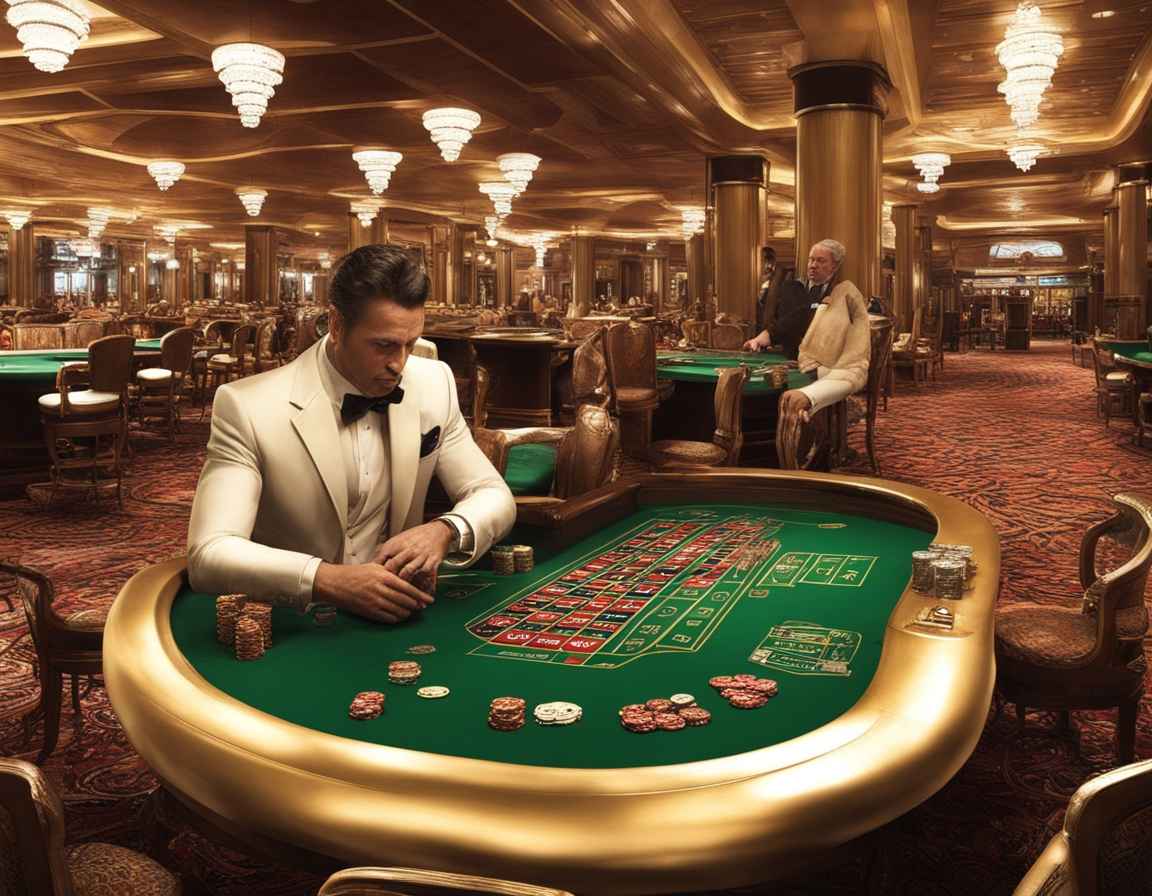
In standard blackjack you're always guessing what the dealer is holding. Double Exposure Blackjack on hbaje removes that uncertainty entirely — both dealer cards are dealt face up, giving you information that completely changes how the game is played.
Most blackjack players spend a significant portion of every session making decisions based on incomplete information. You can see one of the dealer's cards, but the hole card stays hidden until you've already committed to your hand. Double Exposure Blackjack on hbaje flips that dynamic completely. Both of the dealer's cards are turned face up right at the start of each round, so you know exactly what you're up against before you make a single decision.
This sounds like a massive advantage for the player — and in terms of information, it genuinely is. But hbaje's Double Exposure variant balances this by adjusting a few key rules. Blackjack pays even money instead of the standard 3:2, and ties go to the dealer rather than resulting in a push. These adjustments keep the house edge competitive while still giving you a genuinely different and more strategic game to play.
For players who enjoy thinking through their decisions carefully, Double Exposure Blackjack on hbaje is one of the most satisfying card games on the platform. Every choice you make is informed, every strategy decision has a clear logical basis, and the game rewards players who take the time to learn the adjusted basic strategy properly.
The core mechanics of Double Exposure Blackjack follow standard blackjack closely, but with a handful of important rule differences that every player needs to understand before sitting down at the table on hbaje.
The defining rule. At the start of every round, both of the dealer's cards are dealt face up. You see the complete dealer hand before making any decisions on your own hand.
Unlike standard blackjack where a natural pays 3:2, Double Exposure Blackjack on hbaje pays 1:1 for a blackjack. This is the primary trade-off for seeing both dealer cards.
In standard blackjack, a tie results in a push and you get your bet back. In Double Exposure, all ties except a tied blackjack go to the dealer. Tied blackjacks are a push.
Doubling down is restricted to hard totals of 9, 10, or 11. You cannot double on soft hands or on any other hard total, which narrows the doubling opportunities compared to standard blackjack.
Pairs can be split, but only once. Re-splitting is not permitted on hbaje's Double Exposure tables. Aces can be split but each receives only one additional card.
Because both dealer cards are visible, insurance and surrender options are removed from the game entirely. They simply aren't needed when you already know the dealer's full hand.
The tie-goes-to-dealer rule is the one that catches most new players off guard. In a normal session you might tie the dealer three or four times per hour — in Double Exposure those rounds all become losses. Factor this into your session bankroll planning before you start playing on hbaje.
Standard blackjack basic strategy does not apply here. Because you can see both dealer cards, the correct plays shift significantly. Here's how to adjust your decisions on hbaje.
| Your Hand | Dealer Weak (12–16) | Dealer Strong (17–19) | Dealer 20–21 |
|---|---|---|---|
| Hard 8 or less | Hit | Hit | Hit |
| Hard 9 | Double | Hit | Hit |
| Hard 10 | Double | Double | Hit |
| Hard 11 | Double | Double | Hit |
| Hard 12–16 | Hit | Hit | Hit |
| Hard 17–19 | Stand | Hit | Hit |
| Hard 20 | Stand | Stand | Stand |
| Pair of Aces | Split | Split | Split |
| Pair of 8s | Split | Split | Hit |
| Pair of 10s | Stand | Stand | Stand |
* This is a simplified reference guide. Full optimal strategy varies by exact dealer total. Use this as a starting framework when playing on hbaje.
When the dealer shows a pat hand of 17 or higher, you need to beat that total — standing on 17 yourself is almost always a losing play. Hit more aggressively than you would in standard blackjack.
When the dealer is showing a bust hand (12–16), you can stand on lower totals than usual. But remember — ties still lose, so standing on 16 against a dealer 16 is still a losing outcome on hbaje.
Double down opportunities are more valuable here because you know exactly what you need to beat. When the dealer shows 17–19 and you hold 10 or 11, doubling is often the correct play even though it feels aggressive.
If you've been playing standard blackjack on hbaje and you're thinking about switching to Double Exposure, here's a clear breakdown of what changes and what stays the same.
The net result is a game that feels more transparent but demands a completely different strategic approach. Players who come to Double Exposure on hbaje expecting to use their standard blackjack instincts will find themselves making costly mistakes. The game rewards those who take the time to learn the adjusted strategy — and punishes those who don't.
New to hbaje or just new to this variant? Here's how to get from zero to your first hand in a few minutes.
Sign up takes under two minutes. Enter your details, verify your mobile number, and your account is active. New players receive a welcome bonus that can be applied to table games including Double Exposure Blackjack.
Fund your hbaje account via bKash, Nagad, Rocket, or bank transfer. Deposits are instant. The minimum deposit is accessible for players at any budget level, and there's no fee on standard deposit methods.
Navigate to the card games or blackjack section of the hbaje lobby. Double Exposure Blackjack is listed clearly with its minimum bet, RTP, and a preview of the table layout so you know what to expect before you sit down.
Take a moment to read the in-game rules panel on hbaje before placing your first bet. The key differences from standard blackjack — especially the tie rule and the even-money blackjack payout — are worth confirming before you start.
Select your chip size, place your bet in the designated area, and the round begins. Both dealer cards appear face up immediately. Use the strategy guide above to make your decisions, and enjoy one of the most information-rich blackjack variants available on hbaje.
A few practical habits that separate consistent players from those who burn through their bankroll quickly.
Don't sit down at a Double Exposure table on hbaje using standard blackjack strategy. The correct plays are genuinely different. Spend 15 minutes with the strategy chart before your first real-money session — it makes a measurable difference to your results.
Ties that would normally be pushes are now losses. This means your bankroll will deplete slightly faster than in standard blackjack during a neutral run. Set your session limit with this in mind and don't be surprised when a tied hand costs you your bet on hbaje.
When you can see the dealer is holding a bust hand, you have a genuine edge. Don't waste it by playing too conservatively. Double down on 9, 10, and 11 against weak dealer totals — this is where Double Exposure on hbaje gives you the most value.
When the dealer shows 17, 18, or 19, standing on anything less than that total is a guaranteed loss. You need to chase the dealer's total, which means hitting in situations where standard blackjack strategy would tell you to stand.
Unlike live dealer games where there's a timer, hbaje's Double Exposure Blackjack gives you time to think. Use it. With both dealer cards visible, every decision has a mathematically correct answer — rushing leads to mistakes that cost real money.
Decide before you start how much you're willing to lose and at what point you'll walk away with your winnings. hbaje's responsible gaming tools let you set deposit and session limits directly in your account settings — use them to keep your play enjoyable.
Everything players ask before trying this variant on hbaje for the first time.
Double Exposure Blackjack on hbaje gives you information that standard blackjack never does. Register now, claim your welcome bonus, and put your strategy to the test.